

How to Use Forensic DNA & Scientific Evidence in Criminal Trials — Islamabad & Peshawar Guide?
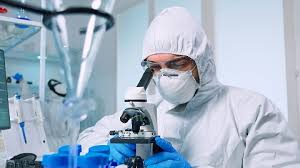
How to Use Forensic DNA & Scientific Evidence in Criminal Trials — Islamabad & Peshawar Guide?
Modern criminal trials increasingly rely on scientific methods to determine truth and ensure fair outcomes Among these methods forensic DNA analysis has become one of the most reliable tools for proving or disproving allegations Courts in Pakistan including those in Islamabad and Peshawar now recognize the importance of forensic evidence in establishing guilt or innocence Whether the case involves violent crimes sexual offenses paternity disputes or unidentified remains DNA testing provides certainty that traditional eyewitness testimony often cannot For accused persons as well as victims understanding how to properly use forensic and scientific evidence is critical to achieving justice
Expert legal assistance in forensic DNA evidence Islamabad ensures that these complex reports are introduced correctly and defended against challenges by the opposing side
Legal recognition of forensic and DNA evidence
Pakistani courts have steadily evolved in their approach to scientific evidence In earlier decades reliance was primarily on witness testimony and circumstantial evidence but recent judgments of the superior judiciary have affirmed that DNA analysis carries significant evidentiary value The law requires that such evidence must be collected properly preserved and presented in court by authorized laboratories to ensure its credibility Once these conditions are satisfied forensic reports including DNA findings are admissible and can become decisive in securing convictions or acquittals
In matters handled through forensic DNA evidence Peshawar lawyers often highlight case law where courts have relied on scientific methods to correct miscarriages of justice
Experience Compassion
We provide compassionate legal support, ensuring clients feel heard, respected, and guided through every step.
Integrity Compassion
Our practice is built on honesty and empathy, delivering ethical and client-focused legal solutions.
Collecting and preserving scientific evidence
Forensic DNA evidence is only as strong as the procedures used to collect and preserve it The chain of custody must remain intact from the crime scene to the courtroom If evidence is contaminated altered or stored improperly its reliability can be challenged by the defense Pakistani courts demand strict proof that samples were collected according to protocol and transported securely This is why lawyers frequently cross examine investigators and laboratory officials to test whether the evidence is trustworthy A single lapse in procedure can render even the most advanced scientific report questionable in the eyes of the court
Using forensic DNA evidence in trial strategy
The effective use of DNA and scientific evidence requires careful planning by defense and prosecution For the prosecution DNA can directly link the accused to the crime scene or victim For the defense DNA may be used to establish innocence by showing that biological samples do not match the accused Lawyers must frame their arguments around the reliability of scientific methods while also anticipating challenges from the other side Because courts may be cautious about placing blind reliance on laboratory reports lawyers need to demonstrate not only the results but also the integrity of the process that produced them
Strong representation in forensic DNA evidence Islamabad ensures that reports are presented with proper legal foundation so they withstand cross examination and judicial scrutiny
Common challenges to forensic evidence
Opposing parties often challenge scientific evidence on the grounds of procedural lapses biased reporting or faulty interpretation Defense lawyers may argue that samples were planted or mishandled while prosecutors may contest the credibility of defense experts Courts therefore evaluate not only the result of the forensic test but also the qualifications of experts the reliability of the laboratories and the consistency of the evidence with other facts of the case This balanced approach ensures that scientific evidence is not accepted blindly but weighed carefully against the entire record
Those seeking relief in forensic DNA evidence Peshawar often rely on such arguments to weaken flawed reports and protect clients against wrongful convictions
The growing role of technology in justice
As technology advances Pakistan’s justice system has gradually incorporated forensic tools including DNA fingerprinting digital forensics ballistics and toxicology reports These methods improve accuracy and reduce reliance on unreliable testimony They also provide courts with objective data that can be verified independently The growing role of technology has therefore enhanced public confidence in the judicial process while also imposing new responsibilities on investigators and lawyers to handle such evidence carefully
Conclusion — Ensuring fairness through science and law
Forensic DNA and other scientific evidence have transformed criminal litigation in Pakistan by providing objective and reliable methods of proving facts But the strength of such evidence depends entirely on how it is collected preserved presented and argued before the court Nouman Muhib Kakakhel – Lawyer & Legal Consultant provides professional guidance in forensic DNA evidence Islamabad and forensic DNA evidence Peshawar ensuring that clients benefit from the accuracy of science while protecting themselves from the misuse of flawed or unlawful reports
How to Use Forensic DNA & Scientific Evidence in Criminal Trials — Islamabad & Peshawar Guide?
Explore our wide range of legal expertise, from constitutional and corporate law to family, criminal, and civil matters. Our lawyers provide trusted guidance and effective representation.
Contact
- Chamber of, Nouman Muhib Kakakhel, Yousaf Riaz Block, Judicial Complex, opposite to Serena Hotel, PTCL Colony, Peshawar, 25000, Pakistan
- office@nmklegal.com
- +92334 4440844
Social Media
Answers & Insights
We’ve got answers
In the modern criminal justice landscape of Islamabad and Peshawar, the shift from traditional eyewitness testimony to Scientific Evidence has become a decisive factor in securing acquittals or convictions. Governed by the Qanun-e-Shahadat Order 1984 and reinforced by the Punjab Forensic Science Agency (PFSA) standards—which are often utilized by Khyber Pakhtunkhwa and Islamabad—DNA and forensic data must meet strict legal criteria to be admissible.
While the Supreme Court of Pakistan has historically viewed DNA as Corroborative Evidence, recent judgments and the 2026 Forensic Protocols have elevated its status. In cases of sexual assault and murder in Islamabad and Peshawar, a DNA match is now considered a highly persuasive scientific fact. However, it still requires a clear Nexus to the crime scene or the victim to be used as a standalone basis for conviction.
The Chain of Custody refers to the chronological documentation showing the seizure, custody, control, and transfer of physical evidence. If a DNA sample taken in Peshawar is not sealed immediately or is stored in a non-temperature-controlled environment during transit to the lab, the defense can argue Contamination. A break in this chain makes the forensic report legally Doubtful, often leading to the evidence being discarded.
Under the Juvenile Justice System Act and various High Court rulings, an accused can be compelled to provide a DNA sample if it is essential for the investigation of a Heinous Offense. In Islamabad and Peshawar, the police must obtain a Formal Order from a Magistrate to collect blood or buccal swabs if the accused refuses, ensuring the collection does not violate the Right against Self-Incrimination.
Ballistic Expert Reports determine if a specific bullet was fired from a specific weapon. If the FIR states the accused fired a 9mm pistol, but the Forensic Science Laboratory (FSL) report identifies the recovered casing as .30 bore, the entire prosecution story is compromised. In Peshawar and Islamabad, challenging the matching of Striation Marks on the bullet is a key strategy to prove the weapon was planted.
Fingerprints recovered from a crime scene are matched against the NADRA Database. In 2026, the use of Automated Fingerprint Identification Systems (AFIS) has made this process faster. The defense should scrutinize the Latent Print quality; if the prints were smudged or handled by multiple police officers before being lifted, the scientific validity of the match can be successfully questioned in court.
In ANF or police narcotics cases, the Chemical Examiner Report must confirm the exact nature of the seized substance. If the police fail to send the samples to the lab within the mandatory 72-hour window, or if the weight of the sample sent does not match the weight recorded in the Seizure Memo, the defense can argue that the sample was Tampered with or substituted.
In cybercrime trials under the Prevention of Electronic Crimes Act (PECA), digital forensics involves recovering data from phones or servers. In Islamabad, the FIA’s Digital Forensic Lab must provide a Mirror Image of the device and a Hash Value to prove the data wasn't altered. The defense must verify that the Forensic Software used was licensed and that the analyst followed standard extraction protocols.
Yes, under Article 164 of the Qanun-e-Shahadat Order, evidence generated by Modern Devices is admissible. However, for CCTV footage to be valid in Peshawar or Islamabad courts, the prosecution must provide a Certificate of Authenticity from the system owner and prove that the footage is unedited. The defense can challenge the Frame Rate or resolution if the identity of the accused is not clear.
A CDR proves the location of a mobile phone and the timing of calls, which is vital for proving or disproving an Alibi. While a CDR shows a phone was near a tower, it does not prove who was using the phone. In High Court practice, a CDR is often used to show that a police officer was not at the crime scene at the time they claimed to have made a recovery, proving a Mala Fide investigation.
Under the law, a Forensic Expert can be summoned for cross-examination. The defense should focus on the Margin of Error, the expiration date of the chemicals used in the lab, and the expert's specific Qualifications. In many cases in Islamabad and Peshawar, exposing that the person who signed the report did not actually perform the test personally can lead to the report being declared Inadmissible.