

How to File Plea for Juvenile Offenders — Islamabad & Peshawar Court Procedure?
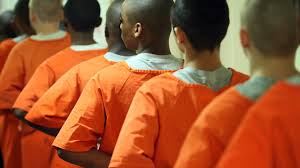
How to File Plea for Juvenile Offenders — Islamabad & Peshawar Court Procedure?
Juvenile offenders face special protections under Pakistani law because children cannot be treated the same way as adults in the criminal justice system The Juvenile Justice System Act 2018 provides a comprehensive legal framework to ensure that minors accused of crimes are dealt with in a manner that emphasizes rehabilitation rather than punishment For families in Islamabad and Peshawar it is important to understand how to file a plea for juvenile offenders and what court procedures apply in such cases This process not only safeguards the rights of the child but also prevents unlawful detention and harsh treatment
Timely legal action in juvenile offender plea Islamabad ensures that children are treated according to the protections guaranteed by law and international human rights standards
Legal foundation for juvenile pleas
The Juvenile Justice System Act recognizes that children accused of crimes must be given fair trial guarantees along with access to legal aid and rehabilitation opportunities Courts are required to treat cases involving minors differently from adult cases by ensuring privacy speedy trials and child friendly procedures This legal framework is reinforced by constitutional protections that guarantee dignity and due process The filing of a plea on behalf of a juvenile is therefore not just a procedural formality but a vital safeguard against injustice
Families seeking assistance in juvenile offender plea Peshawar often rely on these statutory protections to secure relief for their children at the earliest stage of criminal proceedings
Procedure to file a plea for juvenile offenders
When a child is arrested the first step is to file a plea before the trial court confirming the minor’s age Courts usually require documentary evidence such as birth certificates or school records to establish that the accused is below the age of eighteen Once the plea is admitted the court transfers the case to a juvenile court which has exclusive jurisdiction to hear and decide matters involving minors The juvenile court ensures that proceedings are conducted in a child sensitive environment that detention is avoided wherever possible and that rehabilitation remains the primary objective
The assistance of lawyers experienced in juvenile offender plea Islamabad is critical at this stage to ensure that documents are properly filed and that the court is persuaded to treat the accused as a juvenile rather than an adult
Bail considerations for juvenile offenders
Pakistani law provides that bail is to be granted to juvenile offenders as a general rule unless the alleged crime is of the most serious category Even in such cases courts must give priority to the welfare of the child This reflects the principle that minors should not be subjected to unnecessary detention and that their reintegration into society is more important than retribution Lawyers file bail petitions immediately after the juvenile plea is admitted so that the child can return to a supportive environment rather than remain in custody
Experience Compassion
We provide compassionate legal support, ensuring clients feel heard, respected, and guided through every step.
Integrity Compassion
Our practice is built on honesty and empathy, delivering ethical and client-focused legal solutions.
Rights of juveniles during trial
Juvenile offenders are entitled to special trial safeguards They cannot be tried jointly with adults and proceedings must be conducted in camera to protect privacy The court is required to ensure that the child understands the proceedings and is represented by legal counsel Sentencing focuses on education counseling and rehabilitation rather than imprisonment Probation officers play an active role in reporting on the child’s background and recommending alternatives to incarceration
Representation in juvenile offender plea Peshawar ensures that these rights are not overlooked and that the child’s future is not jeopardized by procedural violations
Conclusion — Ensuring justice for children in conflict with law
Filing a plea for juvenile offenders is one of the most important steps to protect children caught in the criminal justice system The law recognizes that minors require rehabilitation not punishment Families must act quickly to establish the age of the child secure bail and ensure that the trial is conducted in accordance with child protection principles Nouman Muhib Kakakhel – Lawyer & Legal Consultant provides professional representation in juvenile offender plea Islamabad and juvenile offender plea Peshawar offering families the legal support they need to safeguard the rights and future of their children
How to File Plea for Juvenile Offenders — Islamabad & Peshawar Court Procedure?
Explore our wide range of legal expertise, from constitutional and corporate law to family, criminal, and civil matters. Our lawyers provide trusted guidance and effective representation.
Contact
- Chamber of, Nouman Muhib Kakakhel, Yousaf Riaz Block, Judicial Complex, opposite to Serena Hotel, PTCL Colony, Peshawar, 25000, Pakistan
- office@nmklegal.com
- +92334 4440844
Social Media
Answers & Insights
We’ve got answers
Under the Juvenile Justice System Act (JJSA) 2018, a child is defined as any person who has not attained the age of eighteen years at the time of the commission of the offense. This age limit is a hard boundary; if an individual is even one day under eighteen, they must be tried by a Juvenile Court rather than a regular criminal court. In Peshawar and Islamabad, the first step in any plea is to establish this age through Documentary Evidence such as a Birth Certificate, B-Form, or School Leaving Certificate to ensure the protections of the Act are triggered immediately.
When the age of the accused is disputed or documents are unavailable, the court must conduct a Determination of Age inquiry. This usually involves an Ossification Test (medical age assessment) performed by a specialized medical board. In the High Courts of Islamabad and Peshawar, it is an established principle that the benefit of any doubt regarding age must be given to the accused. A defense lawyer must move an application for an age inquiry at the very first hearing to prevent the minor from being sent to an adult prison, which would be a gross Investigative Lapse.
Yes, the law is very lenient regarding Juvenile Bail. Under Section 6 of the JJSA, a child charged with any offense (bailable or non-bailable) shall be released on bail unless the court believes that such release would bring the child into association with Hardened Criminals or expose them to moral danger. Even in serious cases like murder under Section 302 PPC, the court in Islamabad or Peshawar often grants bail to a minor because the "Prohibitory Clause" of Section 497 CrPC does not strictly apply to juveniles, emphasizing the child's Right to Liberty.
One of the most innovative features of the law is Diversion, which allows a case to be settled without a formal trial. A Juvenile Justice Committee is established in each district of Islamabad and Peshawar to dispose of cases involving "minor" or "major" offenses through mediation or counseling. If the committee finds that the child is repentant and the complainant agrees to a settlement, the case can be closed through a Diversion Order, sparing the child from the trauma of a prolonged trial and the stigma of a criminal record.
Strictly no. The law prohibits keeping a child in a standard Police Lockup or an adult jail. Upon arrest, the child must be kept in an Observation Home, and if remanded to custody, they must be sent to a Juvenile Rehabilitation Center (formerly known as a Borstal Institution). In Peshawar and Islamabad, the defense must immediately challenge any detention in an adult facility by filing a Habeas Corpus Petition, as such detention is "Without Lawful Authority" and violates the safety protocols meant to protect minors.
A Juvenile Trial must be conducted in a manner that is not intimidating. The court is often held in a room that does not look like a traditional courtroom, and the judge and lawyers typically do not wear formal robes. Only the parents, court officials, and the Probation Officer are allowed to be present, ensuring the Privacy of the Child. In the Islamabad and Peshawar courts, the presence of the media or the general public is strictly barred to prevent the "Secondary Traumatization" of the minor during the proceedings.
The Probation Officer is mandated to submit a Social Investigation Report (SIR) to the court. This report provides a detailed look at the child's background, family environment, and the circumstances that led to the offense. The judge relies heavily on this report to decide whether the child needs rehabilitation rather than punishment. In the defense plea, the lawyer must ensure that the SIR highlights any "Mitigating Circumstances," such as poverty or lack of education, to sway the court toward a Leniency in Sentence.
Absolutely not. Section 12 of the JJSA 2018 categorically prohibits sentencing a child to Capital Punishment (death) or putting them in fetters. Furthermore, a juvenile cannot be sentenced to "Life Imprisonment" or "Labor" while in custody. The maximum punishment is usually a period in a rehabilitation center. In Peshawar and Islamabad, any trial court judgment that awards a harsh sentence to a minor can be successfully challenged in the High Court as being "Coram Non Judice" (not before a judge) and contrary to statutory law.
The court does not simply release a child; it often orders a Post-Release Plan to ensure the minor does not re-offend. This plan might include mandatory schooling, vocational training, or regular meetings with a Probation Officer. In the final plea, a defense lawyer in Islamabad or Peshawar should proactively propose a "Reintegration Strategy" to the judge, showing that the child has a supportive environment and is ready to become a law-abiding citizen, which significantly increases the chances of a Clean Acquittal or release.
No. A significant protection under the JJSA is that any finding of guilt against a child shall not be deemed a conviction for the purposes of any law. This means the child will not carry a "Criminal Record" that would disqualify them from future government jobs or higher education. When filing a plea, the lawyer should emphasize this Non-Disqualification clause to ensure the child's future is protected, treating the entire process as a corrective measure rather than a "Criminal Prosecution."