

How to Appeal Tribunal Election Orders to High Court — Islamabad & Peshawar Practice?
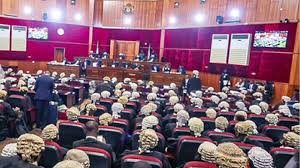
How to Appeal Tribunal Election Orders to High Court — Islamabad & Peshawar Practice?
In Pakistan’s electoral system, tribunals are the first legal forum for disputes over nominations, results, or disqualification. However, a tribunal’s verdict is not always final. Candidates in Islamabad and Peshawar often seek further relief by appealing these decisions to the High Court. This process is essential in ensuring that errors, misinterpretations, or procedural irregularities at the tribunal level do not undermine electoral justice. With experienced legal guidance, appeals before the High Court become a powerful tool for safeguarding rights in election litigation.
Why Appeal Tribunal Orders?
Tribunal orders may be appealed if candidates believe there has been a misapplication of law, insufficient consideration of evidence, or violation of constitutional principles. For instance, a tribunal may dismiss a petition without properly considering documentation or may interpret provisions of the Election Act in a restrictive manner. In such cases, moving to the High Court provides an opportunity to correct mistakes and achieve a fair outcome. Many candidates in Islamabad and Peshawar have successfully challenged decisions by relying on appellate remedies in election disputes.
Jurisdiction of the High Court
The High Court has the authority to review tribunal orders to determine whether they align with constitutional requirements, statutory provisions, and established legal principles. Unlike tribunals, which focus heavily on factual disputes, the High Court emphasizes constitutional interpretation and procedural fairness. This makes appeals in election disputes before the High Court particularly critical, as the judgments issued here set legal precedents that influence future electoral litigation in Islamabad, Peshawar, and beyond.
Filing the Appeal
The appeal process begins with drafting a petition that highlights the grounds for challenging the tribunal’s decision. Candidates must act within the prescribed limitation period, as delays can weaken their case or result in outright dismissal. The petition should clearly identify the legal errors committed by the tribunal, such as improper evidence evaluation or denial of the right to a fair hearing. Engaging experienced advocates in election appeals ensures that appeals are framed strategically and supported by strong documentation.
Experience Compassion
We provide compassionate legal support, ensuring clients feel heard, respected, and guided through every step.
Integrity Compassion
Our practice is built on honesty and empathy, delivering ethical and client-focused legal solutions.
Grounds Commonly Raised in Appeals
Appeals before the High Court often raise arguments related to violation of natural justice, misinterpretation of constitutional provisions, or disregard of key evidence by tribunals. Candidates may also argue that the tribunal exceeded its jurisdiction or failed to provide adequate reasons for its judgment. These grounds are regularly seen in Islamabad and Peshawar cases, where political stakes are high and every technical detail matters. Successful appeals often rely on legal experts in electoral disputes who understand both tribunal practices and High Court requirements.
Importance of Skilled Legal Representation
Appeals are highly technical and require expertise in constitutional law, statutory interpretation, and litigation strategy. Lawyers must present arguments with precision, ensuring that petitions meet procedural standards and deadlines. In Islamabad and Peshawar, candidates who secure representation from specialized lawyers handling election cases stand a far better chance of overturning unfavorable tribunal orders and protecting their political futures.
Conclusion
Appealing tribunal election orders to the High Court is a vital safeguard for candidates in Islamabad and Peshawar. It ensures that errors at the tribunal level do not deny candidates their democratic rights and that electoral disputes are resolved in line with constitutional and legal principles. With the expertise of Nouman Muhib Kakakhel – Lawyer & Legal Consultant, candidates can navigate the appellate process effectively, protect their interests, and strengthen the integrity of Pakistan’s electoral system.
How to Appeal Tribunal Election Orders to High Court — Islamabad & Peshawar Practice?
Explore our wide range of legal expertise, from constitutional and corporate law to family, criminal, and civil matters. Our lawyers provide trusted guidance and effective representation.
Contact
- Chamber of, Nouman Muhib Kakakhel, Yousaf Riaz Block, Judicial Complex, opposite to Serena Hotel, PTCL Colony, Peshawar, 25000, Pakistan
- office@nmklegal.com
- +92334 4440844
Social Media
Your FAQ Guide
Everything You Asked
Navigating the appellate path from an Election Tribunal to the superior courts in Islamabad and Peshawar is a specialized area of practice. Under the Elections Act 2017, the High Court’s role is restricted, as the primary appellate authority for final tribunal decisions actually rests with the Supreme Court. However, the High Courts remain vital for challenging procedural and jurisdictional issues.
No. Under Section 155 of the Elections Act 2017, any person aggrieved by a "final decision" of an Election Tribunal must file an appeal directly in the Supreme Court of Pakistan. The Islamabad or Peshawar High Court does not hear statutory appeals against final judgments of Tribunals presided over by High Court judges, as these are considered equivalent to High Court orders.
While you cannot file a "direct appeal," you can invoke the Constitutional Jurisdiction of the Islamabad or Peshawar High Court under Article 199 (Writ Petition). This is typically done to challenge Interlocutory Orders (temporary orders made during the trial) or if the Tribunal acts "Coram Non Judice" (without jurisdiction).
High Courts are generally reluctant to interfere in ongoing election trials. To succeed in a Writ Petition, you must prove that the Tribunal's order is Patently Illegal or perverse. For example, if a Tribunal in Peshawar refuses to allow a mandatory recount despite the margin being within the legal threshold, the High Court may intervene to correct a "Gross Miscarriage of Justice."
Yes. If there is a dispute regarding the eligibility of the person appointed as the Election Tribunal (e.g., they do not meet the criteria under Section 140), a Writ of Quo Warranto can be filed in the High Court. This challenges the legal authority of the individual to hold the office of the Tribunal.
There is no "fixed" statutory limit like the 30-day rule for appeals, but the principle of Laches (unreasonable delay) applies. In the fast-paced 2026 election cycle, a delay of even two weeks in challenging an interim order can lead the High Court to dismiss the petition, as it may disrupt the 120-day trial deadline.
The High Court has the power to grant an Interim Stay on Tribunal proceedings, but it rarely does so. Supreme Court precedents (like the Javaid Hashmi case) mandate that the election process should not be stalled. A stay is only granted if the petitioner shows that the Tribunal is proceeding in total defiance of the Elections Act.
Generally, Election Tribunals have limited powers of Review. They can correct clerical or arithmetical mistakes, but they cannot re-examine the merits of their own orders. If a major legal error occurs, skipping the review and moving a constitutional petition in the High Court is the standard practice in Islamabad and Peshawar.
In the Islamabad High Court, if a Single Bench decides a Writ Petition regarding a Tribunal's order, an Intra-Court Appeal (ICA) can sometimes be filed before a Division Bench. However, in Peshawar, the availability of an ICA depends on the specific nature of the provincial rules. Many practitioners prefer moving straight to the Supreme Court via a CPLA to save time.
If a petitioner can prove Bias on the part of a Tribunal judge, they can approach the High Court to seek a direction for the ECP to transfer the case to another Tribunal. This is a high-threshold challenge and requires documented evidence of a conflict of interest or partiality.
If a Writ Petition against a Tribunal order is found to be a Dilatory Tactic (intended only to waste time), the Islamabad or Peshawar High Court can impose heavy "Exemplary Costs." In 2026, courts are increasingly using financial penalties to discourage candidates from filing frivolous petitions that obstruct the 120-day disposal mandate.