
How to Apply for Succession Certificate in Islamabad & Peshawar — Documents & Steps?
How to Apply for Succession Certificate in Islamabad & Peshawar — Documents & Steps?
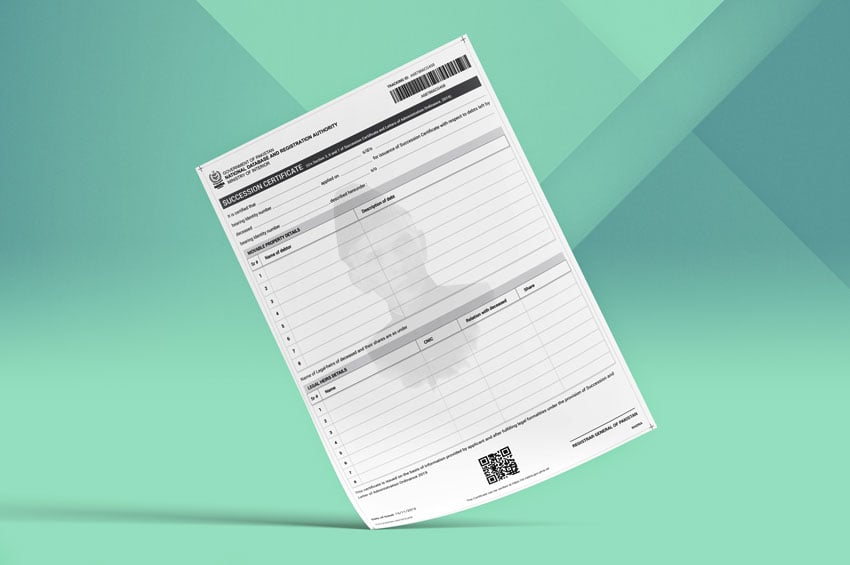
A succession certificate is a vital legal document in Pakistan that enables heirs to claim movable assets such as bank accounts, shares, or bonds of a deceased person when no will exists. Governed by the Succession Act, 1925, it confirms rightful heirs, facilitating smooth asset transfers while adhering to Islamic inheritance laws for Muslims or personal laws for non-Muslims. In Islamabad and Peshawar, family or civil courts process these applications, balancing statutory requirements with local court practices. This guide provides a comprehensive overview of the steps, required documents, and regional specifics to help applicants secure a succession certificate efficiently.
Legal Framework for Succession Certificates
The Succession Act, 1925, under Sections 370 to 381, governs the issuance of succession certificates, authorizing courts to certify heirs for movable assets like bank balances or securities. For Muslims, the certificate aligns with Islamic inheritance shares (Faraid), ensuring distribution to spouses, children, or parents as per Quranic principles. Non-Muslims follow their respective personal laws. Courts verify heirship and settle debts before distribution, as required by Section 370. In Islamabad, under ICT jurisdiction, and Peshawar, under KPK’s civil court framework, procedures are standardized but influenced by local nuances.
Consulting a succession lawyer ensures compliance with both legal and Sharia requirements.
Eligibility and Grounds for Applying
Legal heirs, including spouses, children, parents, or siblings, can apply for a succession certificate if the deceased left no will and owned movable assets. The primary ground is the need to access financial instruments like bank accounts or shares held in the deceased’s name. Applicants must prove their relationship to the deceased and confirm the absence of a will. Courts also assess debts or liabilities to prioritize creditors, as mandated by the Act. Minors or incapacitated heirs may apply through guardians.
A legal consultant can evaluate eligibility and prepare a compelling application.
Essential Documents for Application
Complete and accurate documentation is critical to avoid delays or rejections. Required documents include an original or attested death certificate from NADRA or Union Council, CNIC copies of the applicant and all legal heirs, a NADRA-issued Family Registration Certificate (FRC) detailing the family tree, a succession application or plaint specifying the deceased’s assets and heirship, asset proofs like bank statements or share certificates, an affidavit declaring no will exists and listing all heirs, and optional No-Objection Certificates (NOCs) from heirs waiving their shares. Disputed cases may require additional evidence like family records. Originals are needed at hearings, with photocopies for filing.
A family attorney can ensure documents meet court standards.
Experience Compassion
We provide compassionate legal support, ensuring clients feel heard, respected, and guided through every step.
Integrity Compassion
Our practice is built on honesty and empathy, delivering ethical and client-focused legal solutions.
Step-by-Step Process to Apply
The process, governed by the Succession Act, 1925, typically takes 3-6 months. First, consult a professional to draft the application and verify heirship. File the application in the family or civil court where the deceased resided or assets are located, paying fees of Rs. 500-2,000 plus 1-3% of asset value. The court issues a public notice, often in newspapers, inviting objections within 14-30 days. Attend 2-4 hearings to present evidence of heirship and assets, addressing debts or objections. If no disputes arise or after resolution, the court issues the certificate, specifying heirs’ shares. Finally, present the certificate to banks or institutions for asset transfer.
Timelines: Uncontested cases take 3-4 months; disputed cases may extend to 6-12 months. Costs: Rs. 10,000-50,000, including fees and legal charges.
A succession specialist can streamline filings and expedite proceedings.
Procedures Specific to Islamabad Courts
In Islamabad, applications are filed at family or civil courts in sectors like F-8 or G-10, under ICT jurisdiction. The ICT e-portal enables electronic submissions, minimizing delays. Courts mandate public notices in newspapers like Dawn or Jang and use NADRA’s database for heir verification. Federal oversight ensures efficiency, with certificates issued in 2-4 months for uncontested cases. Asset transfers are facilitated through Blue Area’s financial institutions.
A family law expert familiar with ICT systems can accelerate processing.
Procedures Specific to Peshawar Courts
Peshawar’s civil courts, located at the District Courthouse on Saddar Road, handle succession cases under KPK’s framework, incorporating the KP Births and Deaths Registration Act for death verification. Rural filings in areas like Hayatabad may involve Union Councils initially. Courts publish notices in local dailies and may engage Pashtun elders for heir disputes. Processing takes 3-5 months, with appeals possible to the Peshawar High Court.
A legal advisor with KPK expertise can navigate regional specifics effectively.
Challenges and Objections
Common challenges include disputes among heirs, hidden assets, or creditor claims, which extend timelines. Courts resolve objections through additional hearings, requiring evidence like family records. Fraudulent claims or missing NOCs can lead to rejections. International assets may complicate transfers due to coordination with foreign institutions.
A succession attorney can manage disputes and ensure strong representation.
Post-Issuance Considerations
Once issued, the certificate is presented to banks or financial institutions for asset release. It remains valid indefinitely but may require amendments if new heirs or assets emerge. Update NADRA records to reflect inheritance. For immovable property, a separate Letter of Administration is required under the same Act.
A family law professional can guide asset transfers and post-issuance steps.
Seeking Professional Assistance
Securing a succession certificate demands precision to avoid delays or disputes. Nouman Muhib Kakakhel – Lawyer & Legal Consultant, with extensive experience in Islamabad and Peshawar, offers tailored support, from drafting applications to resolving objections. A legal expert ensures a seamless process, protecting your inheritance rights.
Conclusion
Applying for a succession certificate in Islamabad and Peshawar requires careful adherence to the Succession Act, 1925. From gathering documents like the death certificate and FRC to navigating court hearings, the process demands diligence. Regional differences in ICT and KPK courts call for tailored strategies, best executed by professionals like Nouman Muhib Kakakhel – Lawyer & Legal Consultant. Consult a succession expert to secure your rightful inheritance efficiently.
How to Apply for Succession Certificate in Islamabad & Peshawar — Documents & Steps?
Explore our wide range of legal expertise, from constitutional and corporate law to family, criminal, and civil matters. Our lawyers provide trusted guidance and effective representation.
Contact
- Chamber of, Nouman Muhib Kakakhel, Yousaf Riaz Block, Judicial Complex, opposite to Serena Hotel, PTCL Colony, Peshawar, 25000, Pakistan
- office@nmklegal.com
- +92334 4440844
Social Media
We’ve Got Answers
Solutions to your questions
Under the Letters of Administration and Succession Certificates (Amendment) Act 2025, heirs now enjoy concurrent jurisdiction, meaning you can file directly in court without a rejection from NADRA. This flexible legal path allows families to bypass administrative hurdles if they anticipate a factual controversy or dispute among the survivors.
The applicant must provide the CNIC Cancellation Certificate issued by NADRA alongside the original computer-generated death certificate. To establish the family tree, a Family Registration Certificate (FRC) is mandatory, along with a detailed schedule of assets that lists all bank accounts, stocks, and vehicles owned by the deceased.
The most critical step in the administrative process is the biometric verification of heirs, where every survivor must provide thumbprints at a NADRA center. For those residing abroad, this can be completed at Pakistani Foreign Missions, ensuring that informed consent is recorded digitally to prevent any fraudulent claims to the estate.
Both NADRA and the Civil Courts mandate a public notice in newspapers to invite any unknown heirs or creditors to come forward. There is a statutory 14-day window for objections; if no one contests the application within this period, the authority proceeds toward the issuance of the certificate as the final step.
If a legal heir is under 18, the case must be referred to a Guardian Court to ensure the minor's share is protected. A Guardianship Certificate is often required before the succession proceeds, as the judge acts as the ultimate protector of minors (Parens Patriae) to prevent the mismanagement of their inherited wealth.
Overseas Pakistanis can participate by executing a Special Power of Attorney (SPA) attested by the Consulate, authorizing a representative in Islamabad or Peshawar. In 2026, courts increasingly allow video link testimony for witnesses abroad, providing a remote legal solution for families who cannot travel back to Pakistan for hearings.
Technically, a Succession Certificate covers moveable assets like bank balances and cars, while a Letter of Administration is required for houses and land. In 2026, NADRA SFUs in Islamabad and Peshawar issue a unified digital document that covers both categories, simplifying the transfer of immoveable property for the heirs.
Intentionally omitting an heir constitutes inheritance fraud and is a punishable offense under the NADRA Ordinance. If a hidden heir is discovered, the court can order the revocation of the certificate and initiate criminal proceedings against the applicant for providing false affidavits or misleading a state institution.
Unlike the NADRA process, a Civil Judge will require the applicant to submit a Surety Bond (Zamanat Nama) before releasing the final certificate. This acts as a financial guarantee that the applicant will distribute the shares fairly, protecting the court against future claims of misappropriation by other family members.
Modern certificates issued in Islamabad and Peshawar feature QR code verification, allowing bank managers to instantly check the document’s status online. This real-time digital audit ensures that the certificate is currently valid and has not been stayed by a higher court or cancelled due to a pending dispute.