

How to Recover Haq-Mehr (Dower) in Islamabad & Peshawar Family Courts?
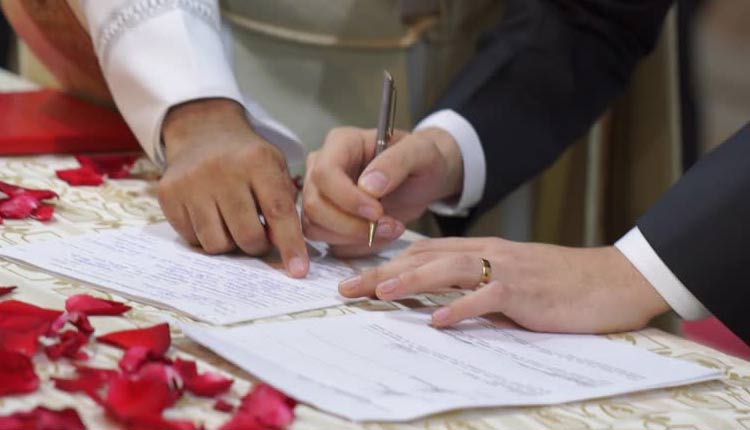
How to Recover Haq-Mehr (Dower) in Islamabad & Peshawar Family Courts?
Recovering Haq-Mehr, the dower promised to a wife under Islamic law during marriage, is a critical legal right in Pakistan, particularly in family disputes involving divorce or separation. Governed by the Muslim Family Laws Ordinance, 1961, and adjudicated in Family Courts under the West Pakistan Family Courts Act, 1964, Haq-Mehr represents a financial obligation enshrined in the Nikahnama, enforceable as a debt against the husband. In Islamabad and Peshawar, where federal and Khyber Pakhtunkhwa (KPK) jurisdictions apply, mothers or wives seeking recovery face procedural nuances but benefit from streamlined court processes as of September 2025. This guide provides a step-by-step approach to pursuing Haq-Mehr claims in these cities, emphasizing required evidence, timelines, and remedies to ensure women secure their rightful entitlements.
Haq-Mehr disputes often arise post-divorce or during marital breakdowns, requiring swift action to prevent financial loss. Courts prioritize these claims as a fundamental right under Sharia, making professional guidance invaluable for navigating the legal landscape.
Understanding Haq-Mehr and Its Legal Status
Haq-Mehr is a mandatory dower stipulated in the Nikahnama, either as prompt (payable immediately) or deferred (due upon divorce or death), per Section 10 of the Muslim Family Laws Ordinance, 1961. It can include cash, property, or other assets, and its non-payment constitutes a civil debt enforceable through Family Courts. The Supreme Court, in cases like 2018 SCMR 315, has upheld Haq-Mehr as a wife’s inalienable right, even post-divorce, unless explicitly waived.
In Islamabad, Family Courts Capital Territory (ICT) operate under federal oversight, while Peshawar’s courts align with KPK’s adaptations, often reflecting cultural sensitivities. Recent 2025 reforms allow partial e-filing, but physical hearings remain standard. Non-payment can also trigger criminal complaints under Section 6 if the husband willfully defaults.
Understanding this framework clarifies the claim’s enforceability.
For legal clarity, consulting Haq-Mehr recovery specialists in Islamabad ensures alignment with statutory provisions.
Eligibility to File a Haq-Mehr Recovery Suit
Any Muslim wife, whether divorced, widowed, or separated, can file for Haq-Mehr recovery if it remains unpaid, as stipulated in the Nikahnama. The claim persists regardless of divorce type—talaq, khula, or judicial dissolution—unless the wife waived her right voluntarily, as clarified in 2017 SCMR 882. Minors or incapacitated wives may have guardians file on their behalf.
Eligibility requires proof of a valid marriage and an outstanding dower, with no bar based on remarriage or time lapse, though delays may invite scrutiny. In Peshawar, cultural norms may pressure waiver, but courts uphold legal entitlement. Non-residents can file via attorneys in the relevant jurisdiction.
Establishing eligibility strengthens the claim’s foundation.
To confirm standing, engaging dower claim advisors in Peshawar helps validate prerequisites.
Required Documents and Evidence
To initiate a suit, gather essential documents to prove the claim:
- Nikahnama copy, highlighting the Haq-Mehr clause (amount, type, and payment terms).
- Marriage certificate or NADRA Marriage Registration Certificate (MRC).
- CNIC of the plaintiff and defendant.
- Divorce decree or talaq notice, if applicable.
- Affidavits detailing non-payment, supported by witnesses (e.g., Nikah witnesses).
- Proof of demand, such as legal notices or correspondence.
- Property documents, if Haq-Mehr includes assets.
Attest all documents via a notary public or gazetted officer. In 2025, digital NADRA records can verify marriage details, reducing fraud risks. In Peshawar, local council endorsements may supplement evidence, while Islamabad courts prioritize NADRA authentication.
Robust documentation prevents procedural dismissals.
For evidence assembly, seek document preparation experts in Islamabad to ensure completeness.
Experience Compassion
We provide compassionate legal support, ensuring clients feel heard, respected, and guided through every step.
Integrity Compassion
Our practice is built on honesty and empathy, delivering ethical and client-focused legal solutions.
Step-by-Step Process to File a Haq-Mehr Suit in Islamabad
- Draft the Plaint: Prepare a suit for recovery under Section 9 of the Family Courts Act, 1964, detailing the Haq-Mehr amount, non-payment facts, and relief sought (payment or property transfer). Include an affidavit verifying claims.
- Pay Court Fees: Deposit fees (PKR 500-2000, based on claim value) via State Bank challan for ICT courts.
- File the Suit: Submit at the Family Court’s Filing Branch in Islamabad’s District Judiciary, obtaining a diary number. E-filing via the IHC portal is available in 2025, with physical verification required.
- Court Scrutiny: The court checks for defects (e.g., missing attestations) within 7 days. Cure promptly to avoid dismissal.
- Issuance of Notices: The court notifies the defendant (husband), who files a written statement within 30 days.
- Hearings: Present evidence and arguments, typically within 2-3 hearings. Courts aim for disposal within 4 months per the Act.
- Judgment: If successful, the court orders payment, enforceable via execution proceedings under Section 13.
This structured process ensures efficient adjudication.
For seamless filings, consult suit filing consultants in Islamabad to meet court standards.
Step-by-Step Process to File a Haq-Mehr Suit in Peshawar
The process mirrors Islamabad with KPK-specific nuances:
- Prepare the Plaint: Draft the suit under the Family Courts Act, emphasizing Sharia compliance and local customs if relevant.
- Pay Fees: Use treasury challan for PHC accounts, with fees similar to Islamabad.
- Submit the Suit: File at Peshawar’s District Family Court or PHC bench (e.g., Abbottabad). Secure a diary number.
- Address Defects: Correct issues within 10 days post-scrutiny.
- Respondent’s Reply: Notices issue, with the defendant responding within 30 days.
- Conduct Hearings: Attend hearings, often involving mediation per KPK norms, within 3-5 sessions.
- Receive Decree: Successful claims result in enforceable orders, typically within 4-6 months.
Virtual hearings in 2025 expedite rural access.
Local expertise aids compliance; engage dower recovery advisors in Peshawar for tailored support.
Execution of Court Orders for Haq-Mehr
If the husband defaults post-decree, file an execution petition under Section 13 of the Family Courts Act to enforce payment. Courts may attach the defendant’s assets, bank accounts, or property, or issue arrest warrants for willful non-compliance. In Islamabad, execution proceeds via ICT courts; in Peshawar, PHC oversees enforcement, often involving local revenue authorities for property seizures.
Execution timelines vary (2-6 months), with 2025 digital tracking reducing delays. NADRA updates reflect enforced payments.
Effective enforcement secures financial relief.
For execution strategies, seek order enforcement specialists in Islamabad to expedite recovery.
Common Challenges and Mitigation Strategies
Challenges include defendants denying the Nikahnama’s authenticity, requiring forensic verification. Delays due to incomplete documents or respondent evasion are common; pre-filing notices mitigate this. In Peshawar, cultural pressures may discourage claims—counter with legal affirmations of rights. Jurisdictional errors (filing in wrong court) delay cases; confirm venue per marriage registration.
Solutions involve timely filings within three years (Limitation Act, 1908) and robust evidence. Courts in 2025 accept digital records, easing proof burdens.
Proactive measures enhance success.
To address hurdles, consult challenge mitigation experts in Peshawar for strategic planning.
Timeline for Haq-Mehr Recovery
Suits must be filed within three years of non-payment or divorce, extendable for cause under Section 5 of the Limitation Act. Filing to first hearing spans 15-30 days, with disposal averaging 4-6 months in both cities, per 2025 data. Execution adds 2-6 months if contested. Urgent claims may be fast-tracked.
Track progress via IHC/PHC case management systems.
Timely action maximizes recovery; engage timeline consultants in Islamabad for scheduling.
Seeking Professional Legal Assistance
Navigating Haq-Mehr recovery requires expertise in family law and local practices. Nouman Muhib Kakakhel – Lawyer & Legal Consultant offers specialized services in Islamabad and Peshawar, from drafting plaints to executing decrees, ensuring Sharia compliance and efficient outcomes.
Conclusion
Recovering Haq-Mehr in Islamabad and Peshawar Family Courts demands meticulous preparation, from gathering evidence to enforcing judgments. By following these steps and addressing challenges proactively, women can secure their rightful dower, upholding financial autonomy. In a legal system blending tradition and modernity, professional support is essential for success.
How to Recover Haq-Mehr (Dower) in Islamabad & Peshawar Family Courts?
Explore our wide range of legal expertise, from constitutional and corporate law to family, criminal, and civil matters. Our lawyers provide trusted guidance and effective representation.
Contact
- Chamber of, Nouman Muhib Kakakhel, Yousaf Riaz Block, Judicial Complex, opposite to Serena Hotel, PTCL Colony, Peshawar, 25000, Pakistan
- office@nmklegal.com
- +92334 4440844
Social Media
We’ve Got Answers
Solutions to your questions
In Pakistan, Haq-Mehr is a mandatory payment that the husband must make to the wife as a mark of respect and a condition of the marriage contract. The recovery process is handled by the Family Courts in Islamabad and Peshawar under the Family Courts Act 1964.
In the Nikah Nama, dower is typically split into two categories. Prompt Dower (Mu'ajjal) is payable immediately upon the wife’s demand at any time during the marriage. Deferred Dower (Mu'wajjal) is usually payable upon the dissolution of the marriage by death or divorce. If the marriage contract does not specify which part is prompt, the court generally presumes a significant portion to be prompt. Understanding this distinction is crucial for determining when you can legally initiate a suit for recovery of dower in the Islamabad or Peshawar courts.
If the dower mentioned in the Nikah Nama is a house, plot, or shop, the Nikah Nama acts as a title document. Under the law, if the husband fails to transfer the property, the wife can file a claim in the Family Court. The judge has the power to pass a decree for the transfer of ownership or order the husband to pay the current market value of the property. Once the decree is passed, the court can direct the relevant Revenue Department or Patwari to update the mutation (inteqal) in the wife's favor.
The primary evidence is the Nikah Nama, specifically the columns (usually 13-16) detailing the dower amount and whether it was paid. If the husband claims he has already paid the dower (e.g., in the form of gold or cash), the burden of proof lies on him to provide receipts, bank transfers, or witness testimonies. The court examines these documents during the recording of evidence phase. If the husband cannot provide a "written receipt" signed by the wife acknowledging payment, the court typically leans toward the wife's claim.
Yes, if gold ornaments were fixed as dower and were not handed over or were later taken back by the husband, the wife can sue for their recovery. The court may order the physical return of gold or, more commonly, the payment of current market value of the gold in PKR. This is particularly important because the value of gold fluctuates; the court ensures the wife receives the equivalent value at the time the decree is passed rather than the price at the time of the wedding.
Under the Limitation Act, a wife can generally file a suit for Prompt Dower within three years from the time she makes a formal demand and is refused. For Deferred Dower, the three-year period usually begins from the date of the dissolution of marriage or the husband's death. However, Pakistani courts are often flexible regarding these timelines in family matters to ensure that a woman's vested right to dower is not lost due to technical delays or attempts at reconciliation.
If a wife seeks divorce through Khula, she is generally required to waive or return her dower as a "consideration" for the dissolution of the marriage. This is often called Zar-e-Khula. However, this only applies to the dower; she does not have to return her dowry articles or other gifts. If the husband was at fault (e.g., cruelty), a skilled lawyer may argue that the wife should retain her dower, turning the case into a fault-based dissolution rather than a simple Khula.
Generally, the dower is a personal liability of the husband. However, if the father-in-law acted as a surety (guarantor) on the Nikah Nama, he can be held legally responsible if the husband fails to pay. In cases where the husband has passed away, the wife can claim her dower from the husband’s estate (inheritance) before any other heirs receive their shares. The dower is treated as a "debt" that must be settled from the deceased’s property as a priority under Islamic and Pakistani law.
If a husband ignores a decree for dower, the wife can initiate execution proceedings. The Family Court has the authority to attach the husband's property—including bank accounts, cars, or real estate—and sell them through a public auction to satisfy the decree. If the husband has no visible assets but is employed, the court can order a deduction from his monthly salary. In cases of extreme defiance, the court can sentence the husband to civil imprisonment until the amount is cleared.
While a registered Nikah Nama is the strongest evidence, an unregistered marriage (Nikah) is still legally valid in Pakistan. In such cases, the wife must first prove the existence of the marriage through witnesses (the Nikah Khwan and the two witnesses to the ceremony). Once the marriage is established, the court will rely on oral testimony or any secondary evidence to determine the fixed dower amount and pass a decree for its recovery, ensuring the husband cannot escape his obligation by failing to register the paperwork.
No, these are three distinct legal concepts. Haq-Mehr is a gift from the husband to the wife as a marital right. Maintenance is the ongoing financial support for daily living. Dowry (Jahez) refers to the items the wife brings from her parents' home. A wife in Islamabad or Peshawar can file a multifarious suit to recover all three at once. Winning a maintenance case does not affect your right to dower; they are separate legal entitlements and the court will pass independent orders for each claim.