


Custom Lawyers in Peshawar
The role of custom lawyers in Peshawar has grown significantly with the increase in trade activity and regulatory oversight at Pakistan’s borders. Customs law covers a wide range of issues, including import and export regulations, tariff disputes, smuggling cases, and violations of trade rules. For businesses and individuals, navigating these complex legal requirements without professional assistance can lead to heavy penalties, seizure of goods, or even imprisonment. Legal professionals specializing in customs law provide representation before customs authorities and courts, ensuring that procedural rights are protected and that clients’ cases are presented effectively.
Jurisdiction of Customs Courts in Pakistan
Customs Courts in Pakistan have exclusive jurisdiction over offenses and disputes arising under the Customs Act and related trade laws. These courts hear cases involving smuggling, misdeclaration of goods, undervaluation of imports, and illegal export practices. They also decide matters relating to customs duties, penalties, and confiscation of goods. By concentrating authority in specialized forums, the law ensures that customs-related disputes are addressed efficiently and by judges familiar with trade regulations.
Procedure Before Customs Courts
Proceedings in Customs Courts are technical and often involve detailed examination of import/export documents, shipping records, and financial statements. Cases typically begin when the customs authorities file a complaint or reference against an individual or company. Once registered, the court conducts hearings, examines evidence, and issues orders regarding penalties, confiscation, or acquittal. Defending such cases requires not only knowledge of criminal procedure but also a strong grasp of trade and tariff regulations. Experienced customs law practitioners in Peshawar can highlight procedural lapses, challenge unlawful seizures, and negotiate favorable settlements where applicable.
Experience Compassion
We provide compassionate legal support, ensuring clients feel heard, respected, and guided through every step.
Integrity Compassion
Our practice is built on honesty and empathy, delivering ethical and client-focused legal solutions.
Importance of Legal Representation
Customs litigation is one of the most technical areas of law, where both financial stakes and criminal liability are often involved. A skilled lawyer can challenge weak prosecutions, prevent wrongful confiscation of property, and protect clients from excessive penalties. For businesses engaged in import and export, engaging professional legal services ensures compliance with customs regulations while safeguarding commercial interests. For individuals accused of smuggling or misdeclaration, representation before the Customs Court is crucial to avoid severe consequences.
- Protects clients from excessive fines, confiscation of goods, and wrongful penalties
- Ensures compliance with technical customs laws and trade regulations
- Identifies procedural flaws in cases filed by customs authorities
Trusted lawyers offering expert legal advice, dedicated representation, and client-focused solutions

Role of Custom Lawyers in Peshawar in Trade Disputes
In addition to criminal proceedings, custom lawyers assist in resolving civil and administrative disputes with customs authorities. This includes challenges to excessive duties, appeals against penalty orders, and negotiations with regulators. They act as a bridge between businesses and enforcement bodies, helping clients achieve fair outcomes while maintaining lawful trade practices.
The services of custom lawyers in Peshawar are vital for anyone involved in customs disputes, whether as traders, importers, exporters, or individuals facing allegations of smuggling. Customs Courts in Pakistan provide a specialized forum for resolving these issues, but navigating their procedures requires professional expertise. Nouman Muhib Kakakhel – Lawyer & Legal Consultant offers reliable advocacy in customs-related cases, ensuring that clients’ rights are protected and that justice is pursued effectively.
Customs
Explore our wide range of legal expertise, from constitutional and corporate law to family, criminal, and civil matters. Our lawyers provide trusted guidance and effective representation.
Contact
- Chamber of, Nouman Muhib Kakakhel, Yousaf Riaz Block, Judicial Complex, opposite to Serena Hotel, PTCL Colony, Peshawar, 25000, Pakistan
- office@nmklegal.com
- +92334 4440844
Social Media
Understanding the Role of Custom Lawyers
Representation in Customs and Trade Disputes

Procedure of Appeals before Collector (Appeals) Customs under the Customs Act, 1969.
The Customs Act, 1969 provides the legal structure for regulating imports, exports, tariffs, and enforcement of customs laws throughout Pakistan. One of the most significant remedies under this law.

Jurisdiction of Customs Appellate Tribunal in Pakistan – A Practical Guide
Pakistan’s customs regime, governed by the Customs Act, 1969, regulates the flow of imports and exports, but disputes over duty assessments, goods seizures, or valuation errors can disrupt trade operations.

Filing Anti-Dumping Complaints in Pakistan under the Anti-Dumping Duties Ordinance, 2000
International trade brings opportunities, but it also exposes local industries to unfair competition. One of the most common threats faced by domestic manufacturers.

Remedies Against Valuation Rulings by Customs Authorities in Pakistan
In Pakistan's dynamic import-export landscape, customs valuation rulings—issued under Section 25A of the Customs Act, 1969—play a crucial role in determining duties and preventing undervaluation.

Customs Penalties & Prosecution – Rights of Importers under Pakistani Law.
Customs law in Pakistan is designed to regulate imports and exports, safeguard revenue, and prevent unlawful practices. At the same time, importers often.
Enforcement of Customs Tribunal Judgments in Peshawar High Court
In Pakistan’s bustling trade environment, the Customs Appellate Tribunal, established under Section 194 of the Customs Act, 1969, resolves disputes over duty assessments, seizures, and valuation.
Role of Directorate of Intelligence & Investigation (Customs) in Smuggling Cases
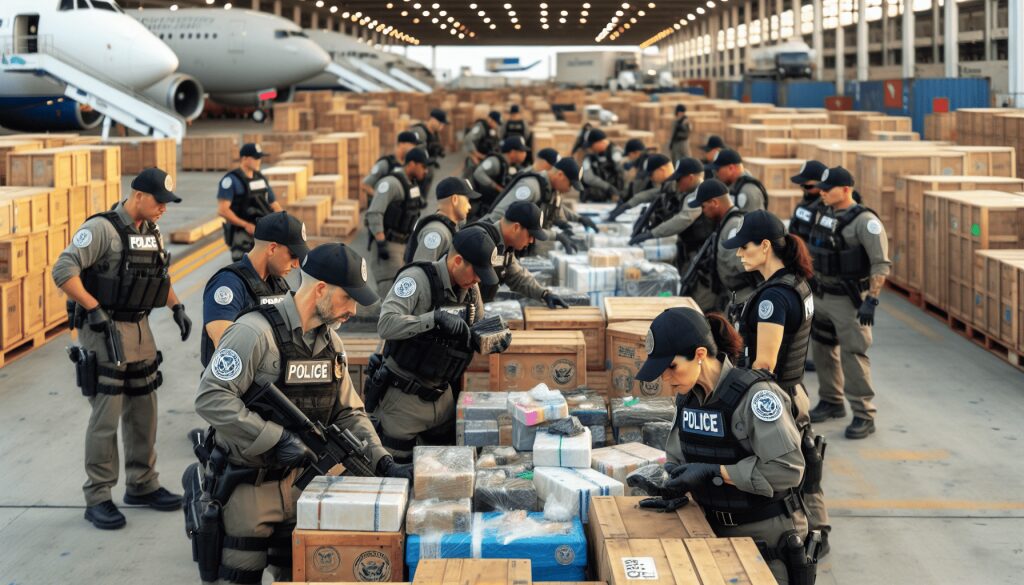
Smuggling poses a significant challenge to Pakistan’s economy, undermining legitimate trade, causing revenue losses, and threatening national security. To counter this problem.
Expert Customs & Import-Export Legal Services
Frequently Asked Question
Navigating the intricacies of cross-border trade requires a clear understanding of the legal framework governing the movement of goods. To help you stay informed, we have compiled these frequently asked questions regarding the Customs Act 1969 and federal trade regulations.
If your goods have been confiscated, the law provides a structured hierarchy for seeking redress. The first step involves filing a request for a "Show Cause Notice" to understand the specific allegations, followed by a formal appeal to the Collector (Appeals). If the decision remains unfavorable, our Custom Lawyers in Peshawar represent clients before the Customs Appellate Tribunal. In cases involving significant legal errors or jurisdictional excesses, we initiate writ petitions in the Peshawar High Court to secure a stay order against the disposal of the seized property. Acting within the statutory thirty-day window is vital to preserve your right to restoration.
Misdeclaration of weight, quantity, or description of goods is treated as a serious offense under Section 32 of the Customs Act. Penalties can range from heavy monetary fines to the complete "confiscation of goods" and even criminal prosecution in cases of intentional fraud. The FBR has recently integrated AI-powered monitoring through the Pakistan Single Window (PSW) to detect discrepancies in real-time. To avoid being blacklisted or facing "red channel" scrutiny, it is essential to ensure that your packing lists and invoices match your GD (Goods Declaration) exactly. We assist businesses in correcting inadvertent errors through "Section 32(3)" applications before a formal investigation begins.
When the customs authorities assess your consignment at a value significantly higher than your purchase price, it is often due to an outdated or generalized FBR Valuation Ruling. Importers have the right to challenge these assessments under Section 25A by providing "transactional value" evidence, such as bank-attested Letters of Credit (LCs) and manufacturer contracts. If the Assistant Collector rejects your evidence, a "Revision Petition" can be filed with the Director General of Valuation. Our legal team specializes in proving the authenticity of import documents to prevent inflated duty assessments that can ruin a business's profit margins.
Exporters are often entitled to a customs duty drawback for taxes paid on raw materials used in the manufacturing of exported products. The claim must be filed through the WeBOC system within the prescribed timeframe after the shipment has sailed. Common reasons for rejection include missing "Export Overleaf" stamps or discrepancies in the HS Code classification. NMK Legal guides manufacturers through the documentation process, ensuring that all proofs of realization are submitted correctly to the Treasury Office to expedite the release of your stuck liquidity.
The rules for a used car import Pakistan have become significantly stricter under the latest SRO 61 of 2026. Only "Overseas Pakistanis" meeting specific residency criteria can utilize the Personal Baggage or Gift Scheme, and there is now a mandatory one-year resale ban to prevent commercial exploitation. The vehicle must be no more than three years old (for cars) or five years old (for SUVs), and all duties must be paid in foreign currency remitted from abroad. We provide legal clearance services to ensure your vehicle is not stuck at the port due to non-compliant documentation or age-limit violations.
Prolonged delays in customs clearance often lead to exorbitant demurrage and detention fees from shipping lines and terminal operators. While these are contractual, the High Court has previously ruled that terminal operators cannot hold goods indefinitely if the delay was caused by "Customs Department" negligence. We help clients obtain "Detention Certificates" from the FBR, which legally compels shipping lines to waive or reduce their charges. If negotiations fail, we file for "interim relief" to allow for the release of the consignment while the fee dispute is adjudicated.
The PSW registration process is now the mandatory gateway for all international trade activities in Pakistan. Businesses must link their NTN and a registered mobile number to the portal to manage Import Export Licenses and LPCOs (Licenses, Permits, Certificates, and Other documents) digitally. This system integrates various departments like the Plant Protection Department and the Animal Quarantine Department. Our firm assists new startups in Peshawar in completing their "Trade Profile" and obtaining the necessary "Biometric Verification" to begin operations without bureaucratic delays.
Under the APTTA (Afghanistan-Pakistan Transit Trade Agreement), goods destined for Kabul through Peshawar are subject to specific "Tracking and Monitoring" regulations. Carriers must use FBR-approved bonded transport and ensure that the "Cross-Border Certificate" is generated at the Torkham border. Any diversion of transit goods into the local Pakistani market is treated as smuggling and carries severe criminal penalties, including the seizure of the vehicle. We represent transport companies in compliance audits to ensure their "Bonded Carrier" status remains intact and protected from illegal interference.
Choosing the wrong HS Code for import can lead to allegations of duty evasion if the selected code carries a lower tax rate than what the department claims. Classification disputes are common for complex machinery and chemical compositions. The legal remedy is to apply for an "Advance Ruling" before the goods arrive or to contest the "Adjudication Order" before the Collector. We work with technical experts to provide a "Legal Opinion" on the correct tariff heading, ensuring your consignment is cleared under the most favorable and legally accurate classification.
Yes, the FBR allows for Alternate Dispute Resolution (ADRC) for cases that do not involve "criminal intent" or "questions of law." This is often the fastest way to resolve valuation or duty disputes without years of litigation in the courts. The committee consists of a retired judge, a tax expert, and a customs officer. If the taxpayer accepts the ADRC's decision, they must withdraw all pending appeals. We represent clients in ADRC hearings to negotiate a fair settlement that saves both time and high litigation costs.