

How to Comply with Election Campaign Finance Rules — Guide for Islamabad & Peshawar Candidates?
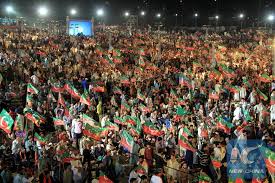
How to Comply with Election Campaign Finance Rules — Guide for Islamabad & Peshawar Candidates
Election campaigns in Pakistan are governed by strict financial rules designed to ensure transparency, fairness, and accountability. In cities such as Islamabad and Peshawar, candidates must carefully follow these rules to avoid penalties, disqualification, or damage to their political reputation. Compliance is not only a legal requirement but also a demonstration of integrity before voters. Many candidates rely on legal experts in election finance compliance to navigate the complexities of these regulations and maintain credibility throughout their campaigns.
Key Rules on Election Campaign Finance
The Election Act, 2017 outlines the spending limits for candidates contesting National Assembly and Provincial Assembly seats. For instance, National Assembly candidates are restricted to a maximum expenditure of four million rupees, while Provincial Assembly candidates may spend up to two million rupees. These limits cover expenses such as advertisements, transport, rallies, and publicity material. Overspending or failure to disclose actual expenses can lead to severe consequences. Candidates in Islamabad and Peshawar must therefore treat campaign finance regulations as a central part of their electoral strategy.
Maintaining Proper Records
One of the most important requirements under campaign finance rules is the maintenance of accurate records. Every candidate must appoint an election agent who is responsible for maintaining books of accounts, receipts, and vouchers for all expenditures. These records must be updated regularly and retained for inspection by the Election Commission of Pakistan (ECP). Candidates who maintain well-organized accounts demonstrate both compliance and transparency. Failure to do so can lead to disputes, which is why many rely on advisors for election expense management to avoid mistakes.
Submission of Statements of Expenditure
After the election, candidates are legally required to submit a detailed statement of their campaign expenditures within ten days. This statement must reflect all expenses incurred and must be duly signed by the candidate and the election agent. The ECP reviews these statements carefully, and discrepancies can result in disqualification or further legal scrutiny. Submitting timely and accurate statements is therefore crucial for candidates in Islamabad and Peshawar. Professional guidance from lawyers handling election expenditure cases ensures that submissions meet all legal requirements.
Experience Compassion
We provide compassionate legal support, ensuring clients feel heard, respected, and guided through every step.
Integrity Compassion
Our practice is built on honesty and empathy, delivering ethical and client-focused legal solutions.
Consequences of Non-Compliance
The consequences of violating campaign finance rules can be severe. Overspending, concealing expenses, or filing false statements may result in fines, forfeiture of seats, or even criminal proceedings. In past elections, several candidates across Pakistan have been disqualified for such violations. In the competitive political climate of Islamabad and Peshawar, the risks are even higher, making it essential for candidates to take compliance seriously. Seeking advice from specialists in election law compliance significantly reduces these risks.
Best Practices for Compliance
Candidates can adopt several best practices to ensure full compliance. These include hiring professional accountants to monitor expenses, keeping receipts for every transaction, avoiding cash payments wherever possible, and reviewing records weekly during the campaign. Transparency with the public also enhances credibility, as voters increasingly value candidates who follow ethical campaign practices. By adopting a disciplined approach to financial management, candidates in Islamabad and Peshawar can run successful and legally compliant campaigns with the support of legal consultants in election campaign finance.
Conclusion
Complying with election campaign finance rules is more than a procedural requirement—it is a vital component of fair elections. For candidates in Islamabad and Peshawar, proper record-keeping, timely submissions, and transparency in expenditures are essential to avoiding penalties and safeguarding their political careers. With expert assistance from Nouman Muhib Kakakhel – Lawyer & Legal Consultant, candidates can confidently manage their finances, meet ECP requirements, and maintain the trust of both voters and the law.
How to Comply with Election Campaign Finance Rules — Guide for Islamabad & Peshawar Candidates?
Explore our wide range of legal expertise, from constitutional and corporate law to family, criminal, and civil matters. Our lawyers provide trusted guidance and effective representation.
Contact
- Chamber of, Nouman Muhib Kakakhel, Yousaf Riaz Block, Judicial Complex, opposite to Serena Hotel, PTCL Colony, Peshawar, 25000, Pakistan
- office@nmklegal.com
- +92334 4440844
Social Media
Answers & Insights
We’ve got answers
When a government department issues an executive order, a Statutory Regulatory Order (SRO), or a notification that exceeds its legal mandate, the High Court remains the final forum for judicial oversight. Challenging these instruments in the Peshawar High Court or the Islamabad High Court.
For the National Assembly (NA), the limit is typically 10 million PKR, while for the Provincial Assembly (PA), it is 4 million PKR. However, you must check the specific notification issued by the ECP for the current election cycle, as these figures are subject to adjustment. Exceeding these limits is considered a corrupt practice and can result in immediate disqualification.
Yes. Under Section 132, every candidate must open a Specific Bank Account exclusively for election expenses. All campaign-related income and expenditures must pass through this account. Using personal or business accounts for campaign transactions is a major legal violation that can lead to the rejection of your financial returns.
While you can receive donations, any contribution exceeding 10,000 PKR from a single individual must be made via Cheque or Online Transfer into the dedicated election account. This ensures a transparent audit trail. Accepting large sums of untraceable cash is a red flag for the ECP monitoring teams in Islamabad and Peshawar.
All candidates must submit their Return of Election Expenses (Form-C) within 30 days of the publication of the results. This form must be accompanied by an affidavit and original receipts/vouchers for every expense exceeding 1,000 PKR. In Peshawar and Islamabad, the ECP is particularly strict about matching these receipts with bank statements.
Any money spent by your supporters, family, or political party for your campaign is legally considered Your Expense. You cannot bypass the spending limit by claiming a supporter paid for a rally or billboards. All such costs must be accounted for in your total expenditure report and processed through your official campaign account.
In 2026, the ECP closely monitors digital spending. Costs for Paid Social Media Ads, professional video production, and social media management teams must be declared. Since companies like Meta and Google provide transparency reports, discrepancies between your declared digital spend and actual ad library data can lead to legal scrutiny.
The ECP specifies the exact Dimensions and Sizes for posters, banners, and portraits. Printing costs must be documented. In Islamabad and Peshawar, local administrations often remove oversized hoardings. The cost of printing and the labor for installation must be included in your financial returns.
Yes. If a winning candidate fails to file their returns within the 30-day window, the ECP can suspend their membership. For losing candidates, failure to file can result in a ban from contesting future elections for a specific period. The Islamabad and Peshawar High Courts rarely grant relief for "unintentional" delays in filing.
The ECP deploys Monitoring Teams and District Monitoring Officers (DMOs) during the campaign. They visit rallies and check the number of chairs, lights, and sound systems used. They prepare an independent estimate of the event's cost. If your declared cost for a rally in Peshawar is significantly lower than the DMO's estimate, you will be issued a show-cause notice.
If you suspect an opponent has exceeded the spending limit or hidden their sources of funding, you can file an Election Petition. You must provide concrete evidence, such as photos of massive rallies, ad invoices, or proof of undeclared bank accounts. If proven, the High Court or Tribunal can unseat the winning candidate for Corrupt Practices.